One Day in Essaouira: Choose a Route for 2, 4 or 6 Hours
One day in Essaouira works best when you choose a compact route and leave space for a break. Start around Place Moulay Hassan, explore the medina lanes, then add the sea-facing fortifications, public harbour viewpoints and beach promenade if your available time permits.
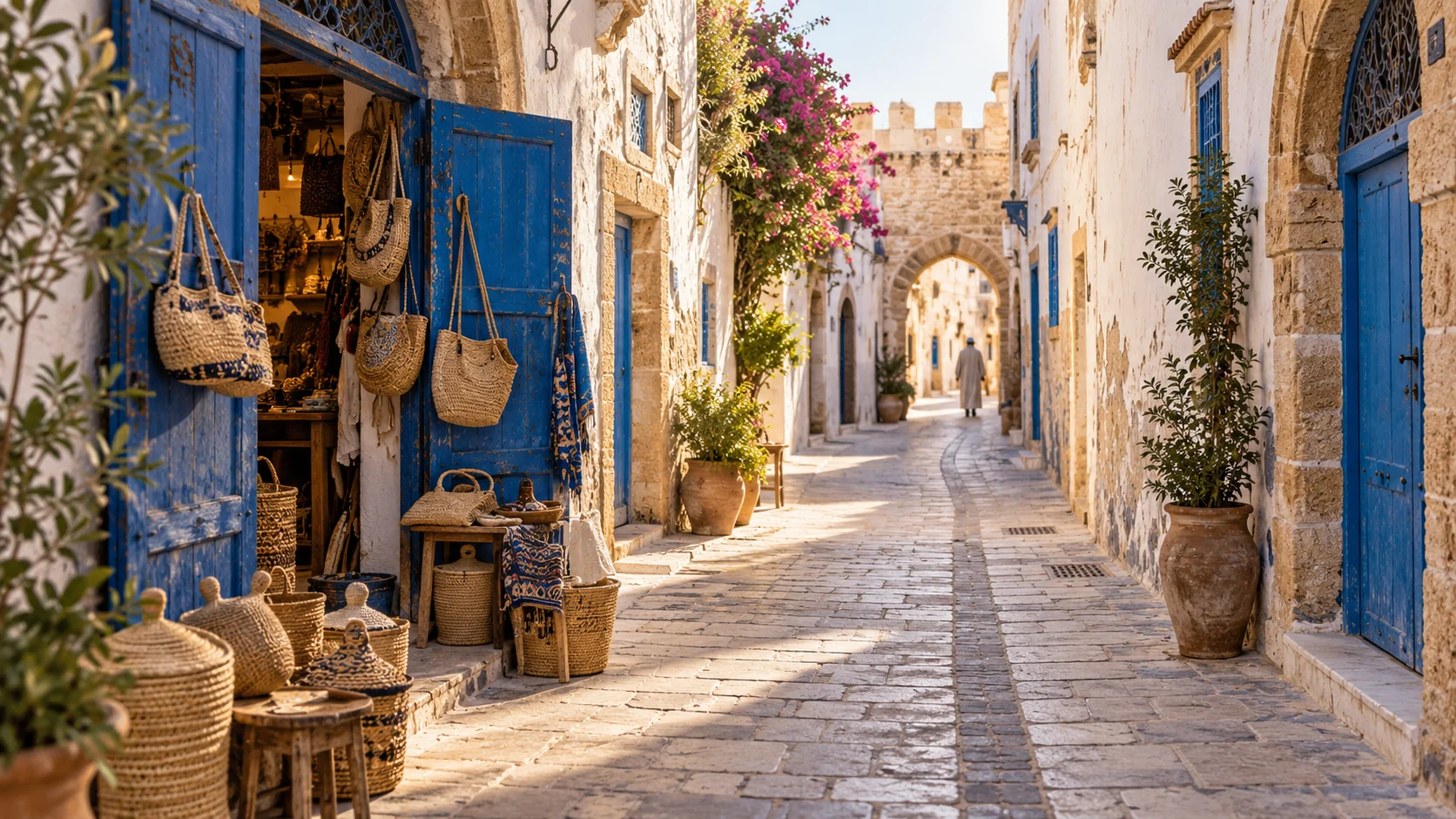
Cover image: AI-generated editorial illustration inspired by Essaouira’s medina; not a photograph of a specific street or landmark.
The important number is your time in town, not the length of the whole day trip. If you are coming from Marrakech, settle your transport and return arrangements first. Then choose a route below; every ticketed interior is optional.
Your time, your route
Build your Essaouira day plan
Choose the time you actually have in town, after allowing for your return journey.
RoamMorocco’s suggested order, not a surveyed walking route. Time allocations include strolling and breaks, rather than measured travel times. Map links locate landmarks; verify pedestrian access locally. Fewer stops does not mean a step-free or wheelchair-accessible route.
What can you see in two hours?
Keep a short visit around the square and main medina lanes. Browse the shops, notice the workshops and return to the same meeting point. You will spend more of the visit seeing the town if you avoid a distant stop or a queue for an interior.
Two hours is a suggested planning window, not a promise that every attraction can be reached and visited. If your starting point is outside the old town or you are carrying luggage, deduct that access time first. For a slower visit, choose the fewer-stops version and spend part of the window at a café near the square.
How should you spend half a day in Essaouira?
With about four usable hours, follow the medina lanes towards the Sqala de la Kasbah, then return towards the harbour and square. Use the map links to locate each landmark and choose the pedestrian route that is open on the day. Leave enough time to get back to your departure point.
The tourism council lists the Sqala de la Kasbah as a historic sea-facing monument. It is a different place from the Sqala du Port beside the harbour. Check entry arrangements at the site you intend to visit; the plan does not assume that all rampart areas are free or open.
In the harbour, stay in public visitor areas and give boats, vehicles and fishing crews space. Viewing the harbour is an optional stop, rather than an invitation to enter a work area.
What changes with a full day?
Six hours gives you more room for the same central sights, lunch and an out-and-back promenade walk. Keep the order flexible: stop for a meal when it suits you, or take the promenade earlier if conditions are pleasant.
Choose food from a menu you can understand and confirm the total before ordering. If a restaurant prepares fish bought elsewhere, ask separately about preparation, sides and drinks. Add your chosen costs to the trip budget calculator instead of relying on an unverified daily average.
A first visit does not need a separate trip to Sidi Kaouki or Diabat. Both require extra planning beyond the central route. Our beach comparison helps you decide whether a longer coastal outing belongs on another day.
What if it is windy or raining?
Choose the sheltered alternative to shorten exposed sections of the day. Stay around the medina, allow an indoor café break and consider a museum or gallery after checking current access. This is a route choice you make using the conditions you encounter; it is not an automatic safety assessment.
The Sidi Mohammed Ben Abdellah Museum is one cultural option described by the tourism council. Confirm its current opening and admission arrangements before depending on it. If a venue is closed, the plan still works with extra browsing or a longer break.
How can you save the route for use offline?
- Choose your time window and pace in the planner.
- Use “Print / save as PDF” and save the selected plan on your phone.
- Download the official medina map from the tourism council.
- Save your accommodation and departure point separately.
The printable plan is free and does not require an email address. Its map links need an internet connection or a map app with the relevant area already downloaded. A saved document remains useful if you lose signal, but it cannot tell you about a newly closed entrance.
Does the shorter route mean less difficult walking?
The fewer-stops option reduces the number of places you try to see. It does not verify a step-free path. Uneven lanes, steps, changing access and the approach to your accommodation may still matter. Ask your host about the specific paths you plan to use if you need an accessible route.
Comfortable shoes, a light layer and a flexible return time are useful planning choices. Keep your luggage arrangements separate from the sightseeing route so the day does not turn into carrying bags between stops.